
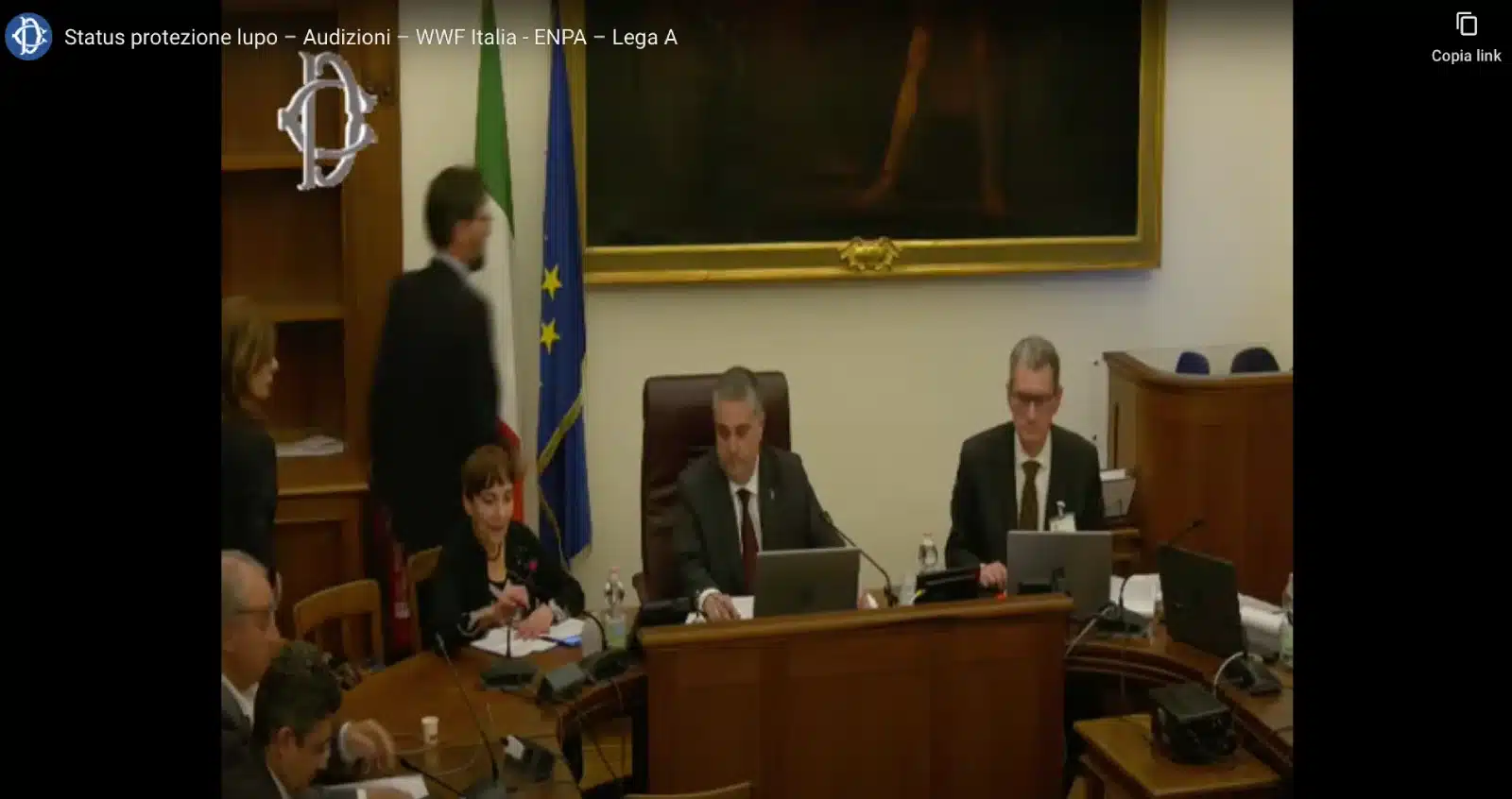
The Italian National Animal Protection Agency (ENPA) spoke—through Annamaria Procacci—at a hearing before the EU Policies Committee of the Italian Chamber of Deputies, as part of the review of the European Parliament and Council proposal to amend Council Directive 92/43/EEC regarding the protection status of the wolf (Review COM(2025) 106 final).
“This proposal is unacceptable, lacking in scientific basis and procedural rigor, and in clear contradiction with the European Union’s environmental principles,” declared Procacci, who is also one of the original authors of Law 157/92 on the protection of wildlife. “Reducing the protection of wolves means opening the door once again to the risk of extinction and encouraging poaching.”
ENPA reminded that the wolf is a keystone species in natural ecosystems: it regulates populations of ungulates, thereby reducing damage to agriculture and helping to prevent African Swine Fever. Nevertheless, Italy’s estimated wolf population of around 3,200 individuals loses more than 10% annually, mainly due to poaching—a systemic issue that remains largely unpunished.
From a legal standpoint, the Italian Animal Protection Agency emphasized that the EU proposal clashes with the core principles of European environmental law. In particular, the principle of subsidiarity in environmental matters should be applied to strengthen (in melius), not weaken (in peius), nature protection. Furthermore, the modification of the Bern Convention does not require the European Union to automatically revise the Habitats Directive, just as a change in the directive does not oblige Italy to amend Law 157/92. Moving hastily toward downgrading the protection status of the wolf violates the precautionary principle—a cornerstone of EU law—and the principle of proportionality, as clearly laid out in Article 16 of the Habitats Directive (92/43/EEC). The latter allows for exemptions only in exceptional cases, when no valid alternatives exist. And such alternatives do exist—numerous and effective prevention measures are already available.
“Italy already has all the legal tools necessary to protect the wolf and ensure coexistence with livestock farming,” said Annamaria Procacci during the hearing, “but prevention is severely neglected. Where electric fencing, guard dogs, and best practices are used, attacks on herds drop dramatically—often to zero.”
ENPA also highlighted the widespread confusion between damage caused by wolves and that caused by stray dogs, a problem particularly acute in central and southern Italy, worsened by the failure to enforce Law 281/91 on stray animals.
ENPA’s Appeal to Parliament
The Italian National Animal Protection Agency—Procacci concluded—calls on Parliament to uphold the protection measures set forth in Article 2 of Law 157/92 and to actively promote prevention policies, ensuring peaceful coexistence between human activities and wolves. It is also essential to provide training and technical support for livestock farmers and, above all, to reinvigorate efforts to combat poaching and stray dog populations. Protecting wolves means defending biodiversity, upholding the law, and safeguarding sustainable economic activities that respect nature.
WATCH THE HEARING – IT (starting at minute 24:35)